Note · 19 October 2026
How many lanes does it take to clear a mile of truck queue?
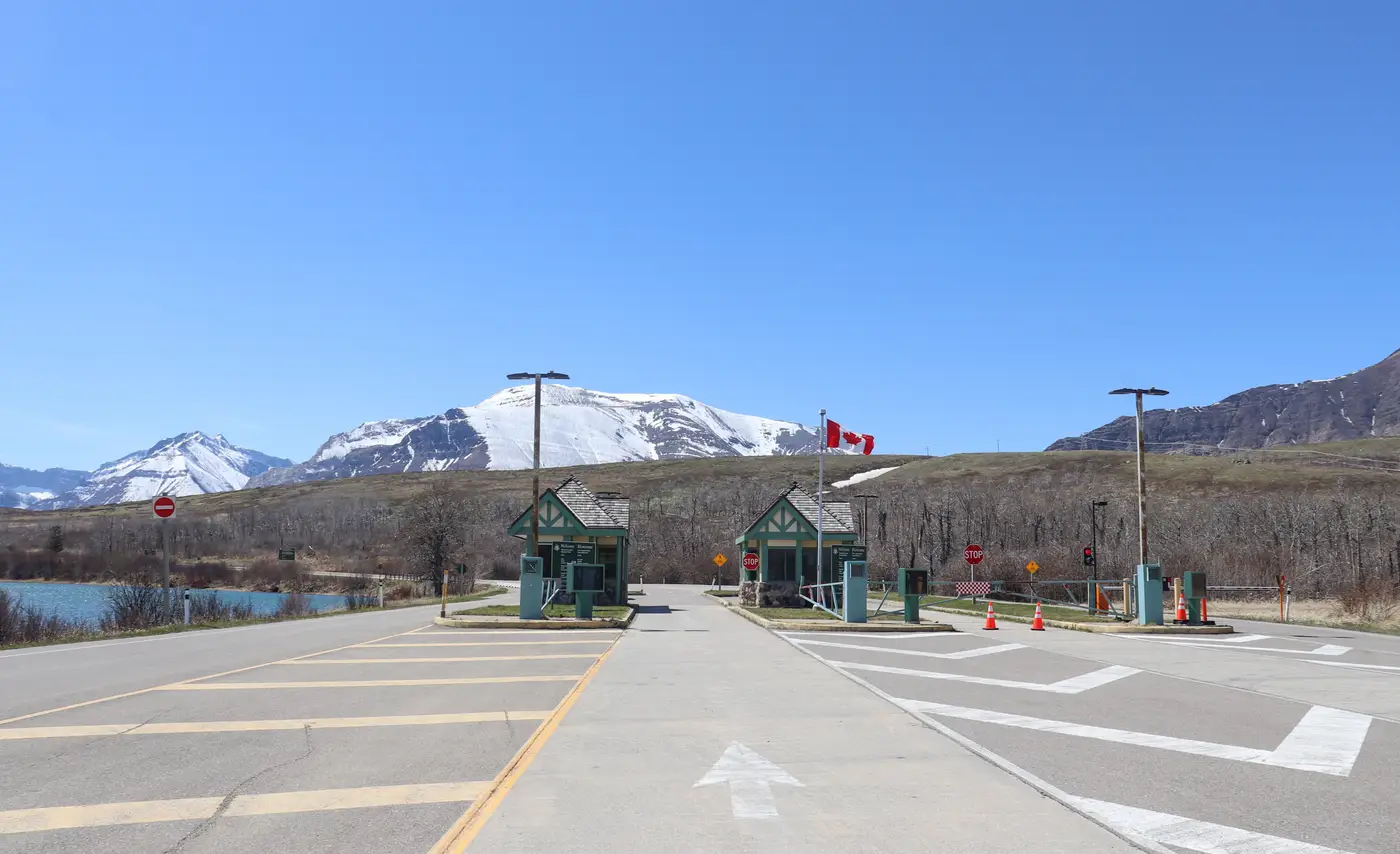
A shift lead calls in: the line's backed up past the mile marker again. Somebody on the ops desk has to answer the question fast. Do we open another lane, pull a crew from secondary, or just let it run and tell the carriers to expect delays. The answer starts with two numbers nobody writes down often enough: how many trucks are in that mile, and how fast each open lane can eat through them.
Counting trucks in a mile of stopped line
A loaded combination truck with trailer runs somewhere around 70 to 75 feet bumper to bumper, including the gap a driver leaves to the rig ahead. Do the division and a mile of stopped queue holds roughly 70 to 75 trucks. Mixed traffic with straight trucks, box vans, and the occasional bobtail shifts that number up a little, maybe closer to 80 to 90 vehicles, since shorter units pack tighter.
That's the queue count. It's not the same as the line-of-sight estimate radioed in from a patrol vehicle, which tends to round to "about a mile" and call it done. A dispatcher basing a staffing call on "about a mile" is working with a 20-vehicle error band before the math even starts.
Matching that count against booth throughput
Lane throughput depends entirely on what's happening at the booth. A document-check lane running routine entries can clear somewhere in the range of 20 to 30 trucks an hour under normal conditions. A lane doing full cargo inspection, seal checks, or manifest reconciliation drops hard, often down to single digits per hour. Secondary exam bays are slower still, and that's before anyone factors in a shift change or an officer pulled for a K-9 sweep.
So take a queue of 75 trucks sitting behind a crossing running two document lanes at 25 trucks an hour each. That's 50 trucks an hour of combined clearance. On paper the queue drains in about 90 minutes. In practice it won't, because trucks keep arriving from the highway side the whole time you're clearing the backlog. If arrivals are running 35 an hour against 50 an hour of clearance, you're only netting 15 an hour against the existing 75. The real clearance time stretches to five hours, nowhere near the 90-minute figure the paper math suggested, and a lot can go sideways in five hours.
Holding steady versus shrinking the line
This is where "how many lanes" splits into two different questions. One lane count holds the queue where it is, matching arrivals one for one. A different, higher count is needed to shrink it before end of shift. Planners who only solve for the first number end up explaining at the evening briefing why the queue looked stable all day and then exploded the moment a lane closed for break.
Running that math honestly means having an arrival rate and a current queue length you trust, not a radioed guess or yesterday's count. A same-day read on how far the line actually stretches back from the gate, pulled from overhead imagery rather than a windshield estimate, is what the lane math in this scenario is built to hand a planner before the staffing call gets made, not after.
If the number you're staffing against is a guess, the lane count built on it is a guess too. Get a real queue length reading before the next shift call.