Note · 13 October 2026
What counts as a queue versus normal traffic at a border crossing
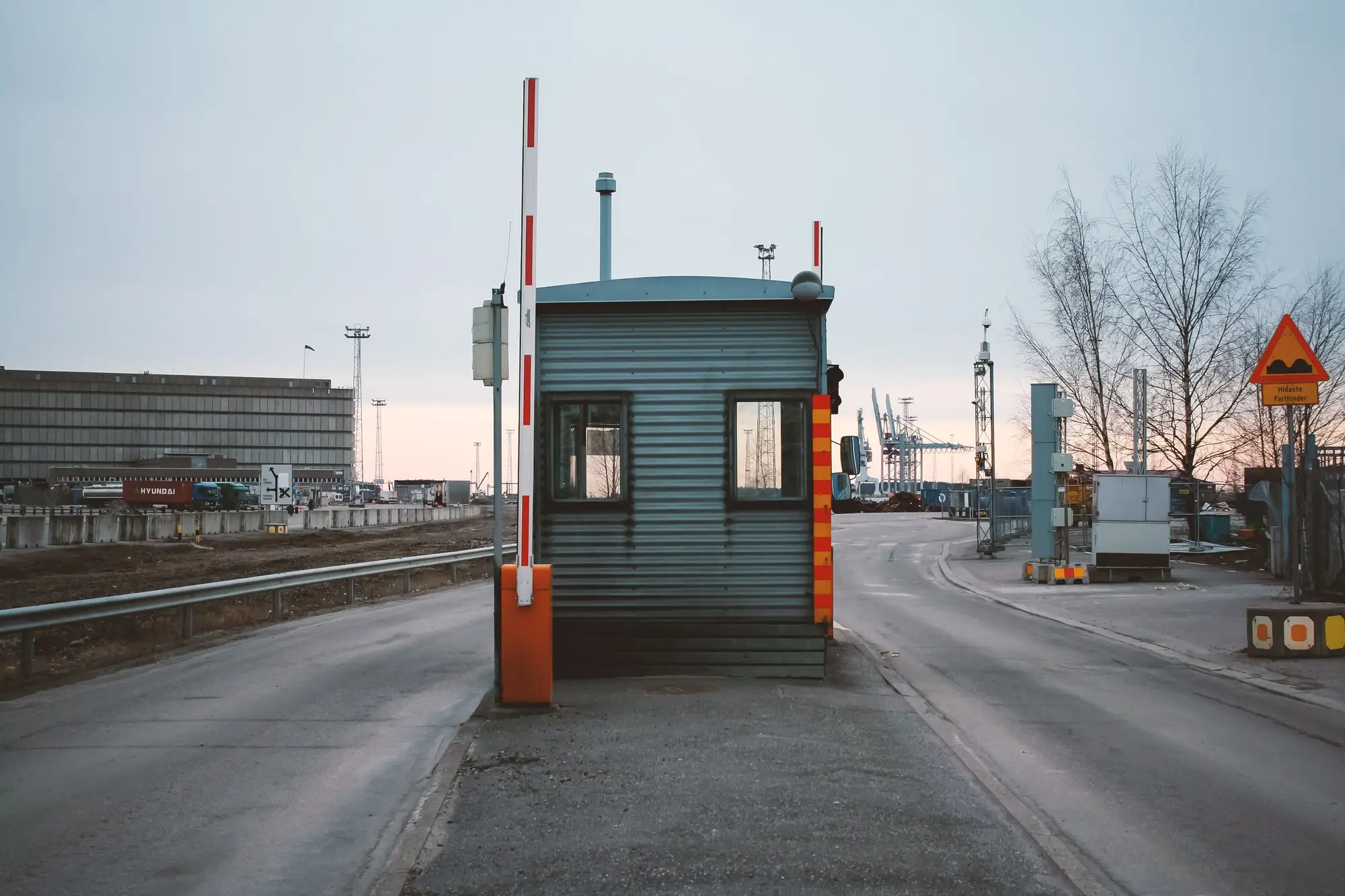
A customs broker calls and says the crossing is "backed up." A shift supervisor looks at a camera feed and sees a lot of trucks. Neither of those is a queue measurement, and treating them as one is how staffing decisions go wrong. If you plan operations at a land border crossing, you need a working line between normal traffic and an actual queue, because the two call for different responses.
Congestion is a rate problem, queue is a stock problem
Congestion describes flow: vehicles are moving, just slower than usual, because volume is up or a lane is running below normal processing speed. A line of trucks rolling through primary inspection at a reduced pace, with steady forward motion, is congestion. It resolves itself once volume drops or a booth comes back online.
A queue is what's left over when the crossing can't process arrivals as fast as they show up. Vehicles stop. They sit. The line has a measurable tail that stretches back from the gate, and it keeps growing until something changes, usually more lanes open, a shift change finishes, or arrivals slow down on their own.
The practical test most terminal and port-of-entry staff use isn't a stopwatch, it's position and stillness. A truck sitting still, with another truck sitting still behind it, and another behind that, back past a fixed point like an on-ramp, a weigh station, or the edge of the staging lot, is a queue. A truck moving at 15 km/h because the lane ahead is busy is congestion, even if it looks the same from a distance.
Where planners draw the threshold
Every crossing has its own geography, so the threshold tends to get tied to a landmark rather than a fixed distance. Some operations treat "backed up past the last commercial exit" as the trigger for a queue alert. Others use "stacked beyond the bonded yard entrance" or "past the inspection canopy." The point of picking a landmark is that it's visible, repeatable, and doesn't depend on whoever's describing it that day.
This matters because "queue" and "congestion" trigger different operational responses. Congestion usually means watching and waiting, maybe opening a FAST lane early. A queue past the agreed threshold means something more direct: calling in extra CBP or CBSA staff, notifying brokers so drivers can plan dwell time, or flagging the backup to the carriers scheduling pickups that day. Confusing the two either gets you crying wolf on a slow rolling line, or worse, under-reacting to a line that's stacking up because nobody checked where the tail had reached.
The other reason the threshold matters is accountability across shifts. If queue length is judged by eye, every supervisor has a different sense of "bad." One person's "it's fine" is another's "we should open lane three." Tying the call to a fixed point on the ground, and to an actual look at how far the line runs, takes the guesswork out of the handoff between shifts.
Why eyeballing it from a tower or a camera falls short
Camera coverage at most crossings ends well before the queue does. A fixed camera on the inspection plaza shows you the first few hundred meters; the tail of a bad queue is often out of frame, around a bend, or past the last pole with power run to it. Ground sensors solve part of this, but they're expensive to install and maintain at crossings that don't already have them, and they only count what passes a single line, not how far back the line itself extends.
That gap, between "how far has the line gotten" and "how far can our cameras see," is the reason a lot of queue calls still come down to a radio report from whoever drove past. An on-demand image of the approach road, taken when a shift actually needs to know, gives a planner something closer to a measurement: the gate, the vehicles in line, and the distance the tail covers, without needing sensors buried in the road.
Queue Length Monitor was built for exactly that gap. It's a briefing note built from a single on-demand image that marks up the queue, states how far it runs, and gives you something to point to when the threshold question comes up again. If your crossing has no ground sensor and the camera feed doesn't reach the tail, that's the case it was built to cover.