Note · 9 November 2026
What a trusted trader lane does to your queue length reading
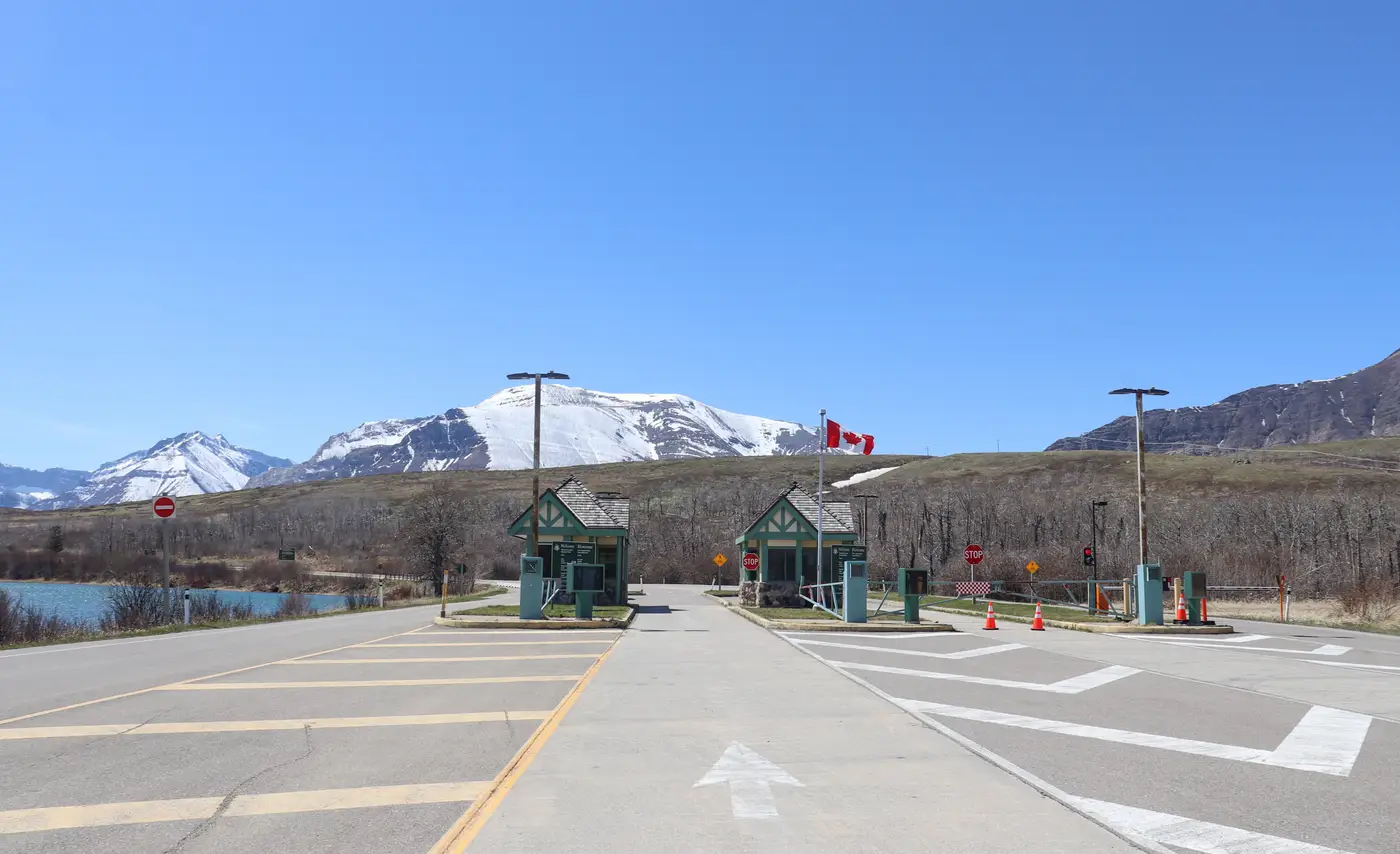
Two lines, one crossing
Most large land crossings run more than one lane into primary inspection. There's the general lane, open to anyone, and there's a dedicated trusted trader lane, marked for carriers enrolled in a program like FAST (Free and Secure Trade, for the US-Canada and US-Mexico borders) or holding C-TPAT certification, PIP membership in Canada, or an equivalent authorized-economic-operator status elsewhere. The dedicated lane usually has its own approach road, its own booth or booths, and in a lot of layouts a separate stretch of apron before the two lanes merge or stay split all the way to the dock.
That physical split matters more than it looks like on a sketch of the crossing. A trusted trader membership doesn't just skip paperwork, it changes which line a truck sits in, and that means it changes where the backup forms and how long it runs. A general-lane queue and a FAST-lane queue at the same port, on the same morning, can be entirely different lengths. One can be backed up past the last exit ramp while the other is running clear.
Why one queue number stops being useful
If you're tracking "queue length at the crossing" as a single figure, a trusted trader lane breaks that figure. A planner pulling one number for the whole port is really averaging two different operating conditions, or worse, picking up whichever lane happens to be visible from wherever that number got measured. Neither tells a dispatcher holding a FAST-enrolled load whether to release it now or hold it back an hour, because the number doesn't say which lane the load will sit in.
This gets worse at crossings where the dedicated lane only runs certain hours, or where staffing pulls officers off the FAST booth during a surge and routes some of that traffic into the general flow. The lane split isn't fixed. It moves with staffing, time of day, and volume, so a queue reading taken once a day, or taken from a ground sensor fixed at one point in the road, can miss a lane that's just opened, just closed, or just absorbed traffic from the other side.
For a logistics planner booking appointment windows against a crossing, or a customs ops planner deciding where to stage trucks overnight, the question isn't "how long is the queue." It's "how long is the queue in the lane this load will actually sit in."
Reading each lane separately
Overhead imagery handles this the way a ground sensor loop in the pavement can't: it shows the whole approach in one frame, both lanes, at whatever moment the pass was taken. A sensor buried at one point on the general lane has nothing to say about the FAST lane twenty feet over. A camera on a single boom covers whatever it's pointed at and nothing else. A wide overhead pass catches the split itself, where the lanes diverge, how far back each one is backed up, and whether vehicles are sitting in the wrong lane because the dedicated one is closed.
That's the reading a planner needs when a crossing runs dual lanes: a queue length for the general lane and a separate one for the trusted trader lane, pulled from the same pass so they're directly comparable.
Queue Length Monitor builds exactly that kind of reading. An on-demand VHR pass over the crossing gets turned into a briefing note with a queue length estimate and the marked-up image it came from, so you can see which lane is backed up and by how much, not just a single figure for the whole port. If your crossing runs a dedicated FAST or C-TPAT lane, see how a lane-specific queue reading works before you plan your next appointment window around it.